
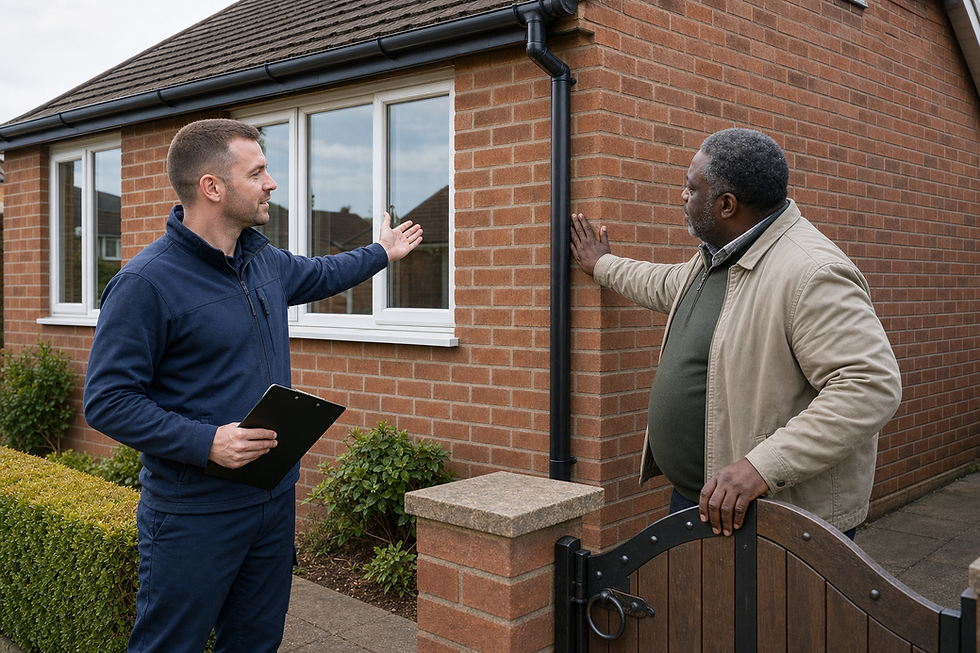
Why targeted building repairs save guesswork
Scope shaped by the actual defect
We assess the damage, materials and access before defining work instead of using a one-size plan.
Connected elements are coordinated
Roofing, brickwork and drainage-linked issues can be tackled in a joined-up way where needed.
Each item is clearly listed
You can see which element is being repaired and why, without vague all-in descriptions.
Not every repair fits neatly into one trade box
A cracked wall detail, damaged render edge or defect around a drainage run doesn't stop to check which trade heading it belongs under. We carry out targeted property repairs in Alford where the building fabric has been damaged and the scope needs to reflect the real condition on site. That includes walls, masonry, external elements and faults connected with roofing or drainage. The visible damage, the likely cause, the existing materials and safe access all shape the repair, which is why we assess first rather than jumping straight to a standard answer.

Joined-up repairs stop one fault undoing another
Water entry and movement often affect more than one part of a property at the same time. A roof issue can mark masonry below it. A drainage problem can disturb surrounding fabric. We coordinate the connected elements where that makes sense, then itemise each damaged part so you can see exactly what is being proposed. That makes the job easier to understand and helps avoid the classic repair where one area is tidied up while the linked defect beside it is left to carry on causing trouble.
Frequently asked questions
What kind of property repairs do you handle?
We focus on targeted repairs to damaged building fabric, especially external elements, masonry issues and defects linked to roofing or drainage. The job is defined by the condition we find rather than forced into a broad package that doesn't match the property.
Why do you itemise each part of the repair?
Because one visible problem can involve several damaged elements. Listing them separately makes the scope easier to understand and shows what is essential now, what is related, and what may be optional or suited to a later stage of work.
Can you deal with roof and wall defects in the same job?
Yes, where the faults are connected and it makes practical sense to assess them together. That joined-up approach is especially useful when water entry or movement has affected more than one part of the property and a single repair would otherwise miss the bigger picture.